
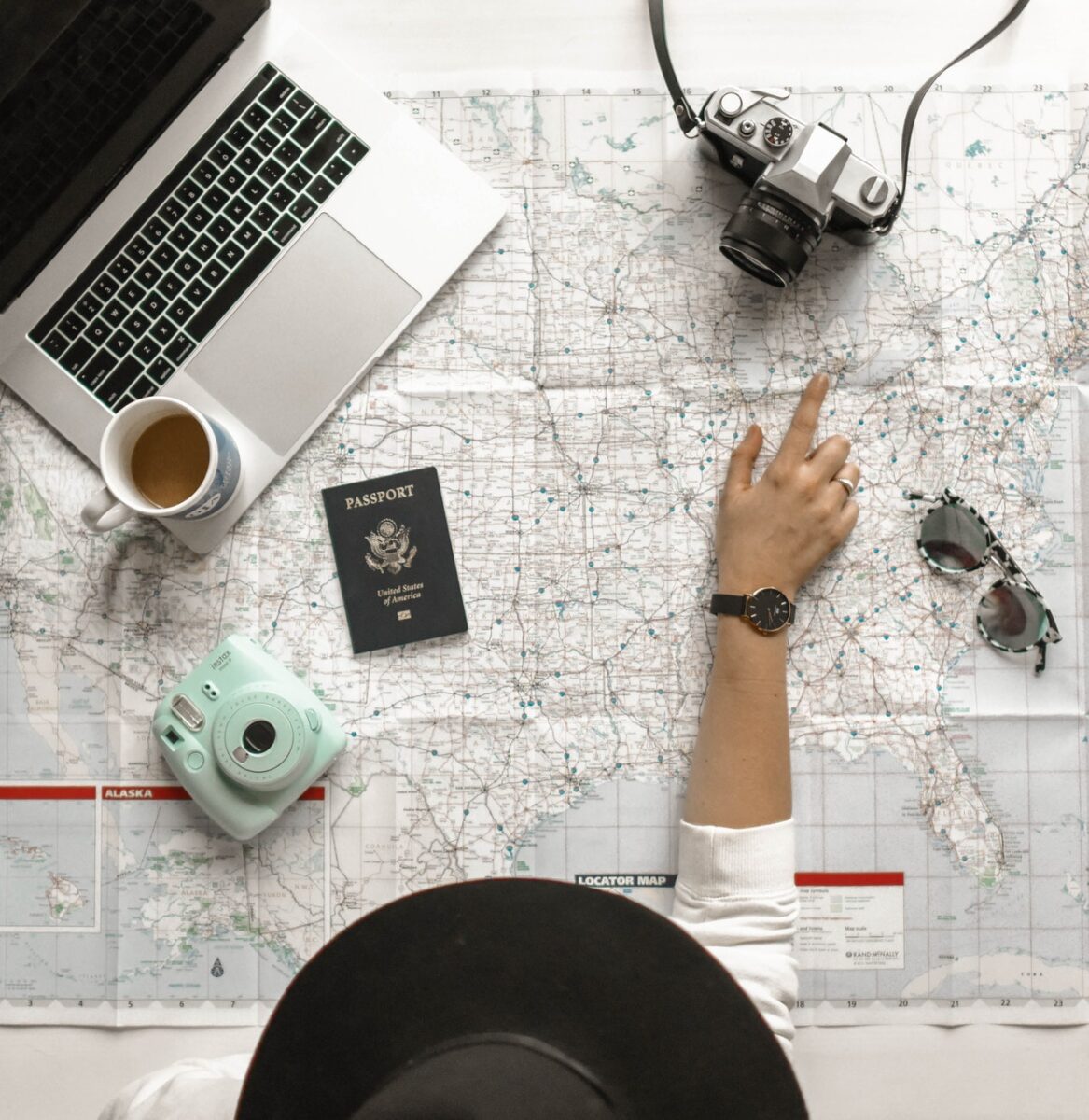
Most people need to balance work and travel. Fortunately, there are lots of ways to make this happen. Here are the main five and what you need to know about them.
Being a digital nomad
This really can be “living the dream”, but it brings a lot of challenges. Firstly, you may regard yourself as location-independent, but tax authorities are likely to have a different view. This means that it’s a good idea to work with an accountant to make sure that you stay on the right side of the law.
Speaking of the law, you will need to check what you can and can’t do in each and every country you visit. If you break the law, even unknowingly, there is a good chance you will invalidate any insurance you have. This could leave you massively exposed in the event of any medical or legal issues.
You will also need to relearn the practicalities of life and business every time you go to a new place. This can take a major chunk out of your productivity. If you’re travelling across time zones, then you create another set of challenges. Not only will your body (and mind) need to adapt, but you’ll also need to keep track of your appointments.
Being a digital nomad in your home country
Working and travelling around your home country can be a great way to explore the place you live in far greater depth. Be aware, however, that many of the same challenges will still apply. For example, you’ll need a place of residence to be assessed for both income tax and council tax. You’ll also find that laws and bylaws may vary from place to place.
Learning the practicalities of life in each new area might be less of a challenge than it would be overseas. At least you will speak the language fluently. Be aware, however, that the availability of facilities can vary widely according to location. In particular, you are by no means guaranteed broadband internet (or indeed any internet).
Temping and travelling
Temping and travelling solves a lot of the challenges of being a digital nomad. You work in one geographical location until you have enough money to go off travelling. When you travel you’re a full-time traveller. This means that you can give your full attention to the travel experience. Then you come back and do it again for as long as you like.
You can even combine this approach with a bit of a spin on the concept of digital nomading. In other words, you can base yourself in different parts of your home country. Then you give yourself an opportunity to explore it too. For example, you could literally spend years just exploring London.
The key to making this approach work is to maximize your chances of getting regular, temporary employment in your home country. If you’re planning on temping and travelling for a long period, you may need to budget for “upskilling” yourself. On the plus side, these extra skills may well come in useful over the long term.
Working overseas
There are still likely to be plenty of opportunities for working overseas post-Brexit. In fact, there will probably still be opportunities for short-term, unskilled seasonal jobs. Most countries do need additional unskilled labour at certain times of the year. They are therefore likely to open their doors to “working holidaymakers”, especially young ones.
That said, the more in-demand skills you have, the more options you are likely to have. The classic “traveller’s skill” is teaching English. This is still massively in demand, but these days standards are high. For a decent, legal, job you’ll generally need at least a degree or a recognized EFL qualification. Increasingly, you need both, plus a long-term commitment.
It’s also important to be aware that it’s very difficult to get regular employment in the EFL field in the UK. This means that it’s not as portable a qualification as it might, at first, appear. By contrast, many of the in-demand skills in the UK are also in-demand overseas. For example, completing a Health and Social Care Apprenticeship can open doors both in the UK and abroad.

Getting a job that involves travelling
Travelling for your job is like digital nomading but turned on its head. It will be your employer’s responsibility to deal with tax, work visas and any obvious practicalities (like accommodation). It will, however, also be your employer’s decision where, when and how you travel and how long your trip lasts.
In other words, when you travel for your job, your job is always going to have to come first. That said, the same is effectively true of digital nomading. Your job is what is paying your bills. This means that you always need to put in the hours to earn the income you need. Digital nomading may offer a bit more flexibility about when, exactly you work, but this isn’t guaranteed.
In and of itself, travelling for business isn’t necessarily the best way to appreciate a new place. It’s fairly standard for a “business trip” to mean going from the airport to a hotel to an office and back again. You’re also likely to have very limited free time. There is, however, generally nothing to stop you extending your trip at your own expense and doing some proper travelling.
Moreover, some ‘trips for work,’ as it were, can mean you head to different areas in your own country, which of course allows you to see more than you would attending a singular work location for some time. Becoming a travelling consultant, getting involved in the jobs for the NDIS scheme, or even attending the sales departments and meeting with nationwide corporate clients can make a big difference.
Travelling in your work holidays – for the employed
Travelling in your work holidays may sound limiting. In actual fact, however, there can be more opportunities than you might think. A lot will depend on your line of work. Some jobs will require, or at least encourage you to take holidays at certain times. Many businesses will prefer non-parents to work during the school holidays so that parents can get time off.
If you want to travel as much as possible, then try looking for jobs with flexible working. For example, some jobs do allow you to work a lot of shifts in a short period and then have time-off in lieu. Alternatively, you might want to look at part-time working. For example, if you could earn a decent income working three days a week, you could have regular long-weekend breaks.
It may also be worth exploring if your employer allows sabbaticals for travelling. Even if they don’t, you could always suggest the idea. Alternatively, you could simply ask for unpaid time off (as opposed to paid holiday). Employers are often quite happy to agree to this as long as it doesn’t disrupt their business.
Travelling in your work holidays – for the self-employed
If you’re self-employed, then, in principle, you set your own hours and can work, or travel, whenever you want. In practice, if you want to succeed at self-employment, you generally need to treat it as a business much like any other. In fact, you may well find yourself putting in even more hours than you would in a regular job.
Harsh as this may sound, in the early days of self-employment, it’s probably a good idea to hold off on overseas travel. It’s advisable to make sure that you can get “back-to-base” quickly if something crops up in your business. Once you’re familiar with your business cycles, then you’ll have a better idea of when your quiet periods are and hence when it’s easiest to travel.
You’ll also have a better idea of whether or not your business needs cover and, if so, how to organize it. Ideally, you’ll pass responsibility for your business on to someone else. This means you’re going to need to find that someone in advance and potentially train them. If you are going to be your own cover, then make sure you are guaranteed access to anything you need.